Start with the simplified second-price idea
In a simplified second-price auction, the winning advertiser does not necessarily pay its maximum bid. It pays approximately the amount needed to beat the next-ranked competitor. Generalized second-price auctions extend that idea across multiple positions and can adjust ranking and price for relevance or quality.
The complaint alleges Amazon had long used simplified explanations saying a winner would pay slightly more than the next-ranked advertiser. Amazon answers that Sponsored Ads placement is not a raw-dollar-bid contest and that older training examples did not fully describe the system. U.S. District Court filing via FTC Amazon
A simplified illustration of the allegation
One maximum bid, two possible price paths
Competition-generated result
Advertiser’s maximum bid: $5.00
Competing price: about $2.00
Government’s alleged price layer
Amazon-selected soft reserve: $4.25
Advertiser’s maximum bid: $5.00
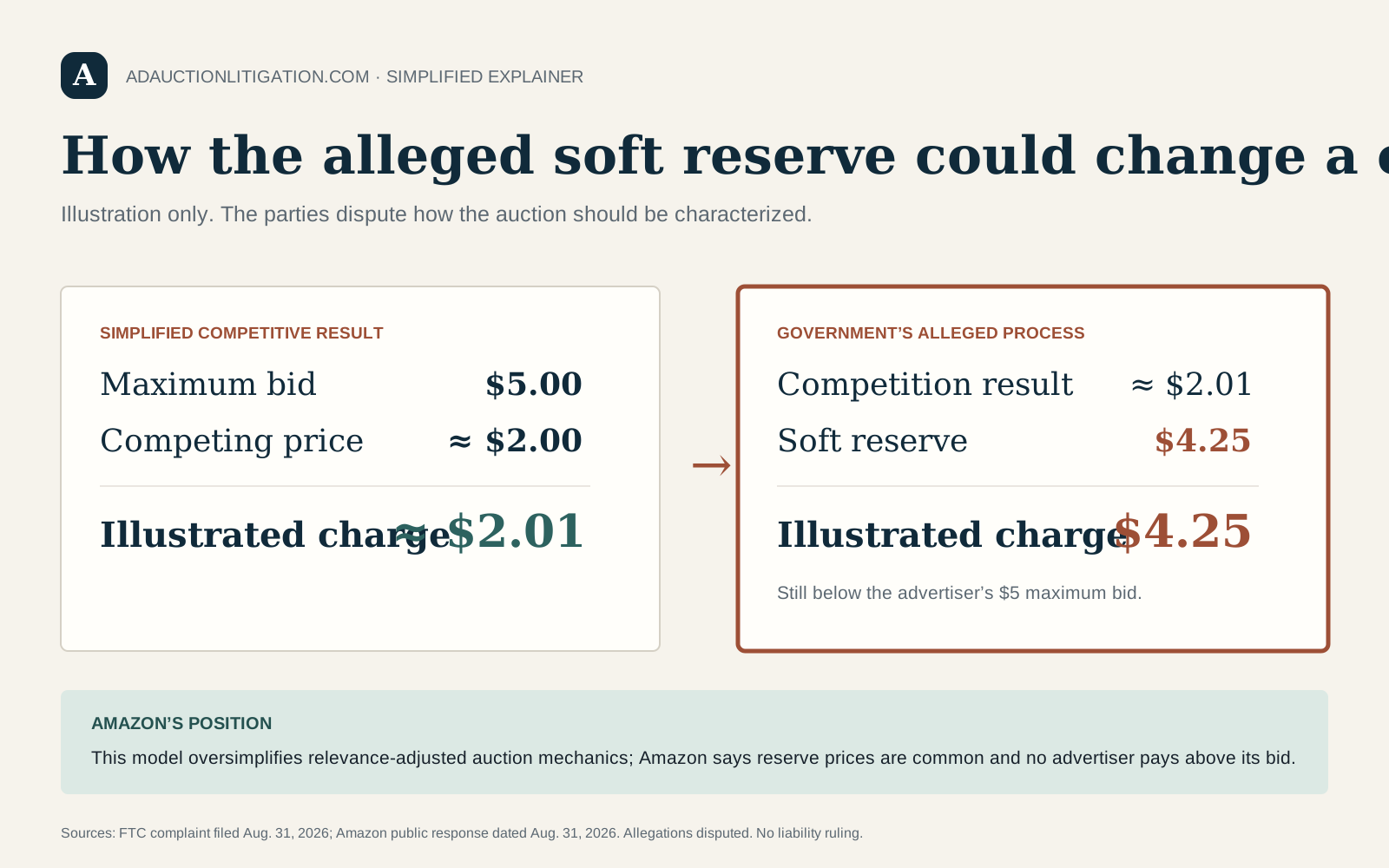
What the government alleges happened
Plaintiffs describe a two-stage process: Amazon first calculated a GSP CPC from the ranked auction, then calculated a “soft reserve” or “proxy 2nd price.” The complaint alleges that when the second number was higher, Amazon could use it as the click price, capped by the winning advertiser’s bid. It quotes internal material referring to a price not set by an actual bidder and to an “invented auction participant.” Those quotations appear in a pleading and remain contested. U.S. District Court filing via FTC
The government’s deception theory is not simply that a reserve existed. It alleges Amazon continued fostering an expectation that actual advertiser competition determined the price while using information unavailable to advertisers to set a higher price. Amazon disputes that interpretation of both the auction and its communications.
Why relevance matters to Amazon’s response
Amazon says ads are ranked heavily by predicted relevance, not merely by nominal bids. A competitor’s relevance-adjusted rank can therefore matter more than its raw-dollar bid, and a one-cent-above-the-next-bid example cannot reproduce the real system. Amazon also says Campaign Builder told advertisers a bid was the maximum CPC they could be charged. Amazon
That response creates a distinct factual and legal dispute: whether disclosure of the maximum possible price adequately described how the actual price would be selected. The court has not answered it.
Reserve price does not automatically mean “soft reserve”
A conventional reserve is a minimum price for selling inventory. The government’s challenged term describes an allegedly different Amazon-selected pricing layer that could replace a lower competition-generated result. Amazon rejects the government’s “shill” characterization and treats the mechanism as a legitimate reserve. The labels should not be treated as conclusions.